Through sustainability management, we strengthen the linkage between the Group’s sustainable growth and regional value. In addition, we enhance transparency in our disclosures to build long-term, trusted relationships with our stakeholders.
To support these initiatives, we established the Group Sustainability Policy in December 2021 to enhance regional value as a corporate group and ensure this commitment is shared across the Group.
To contribute to a sustainable society, we have identified key ESG issues (“materiality”).
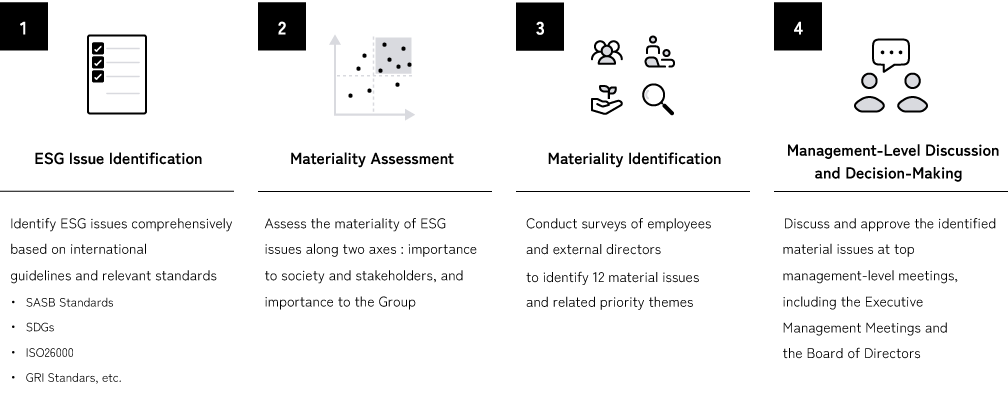
Guided by the Group Sustainability Policy, we will proactively address the following 12 material issues through our business activities.
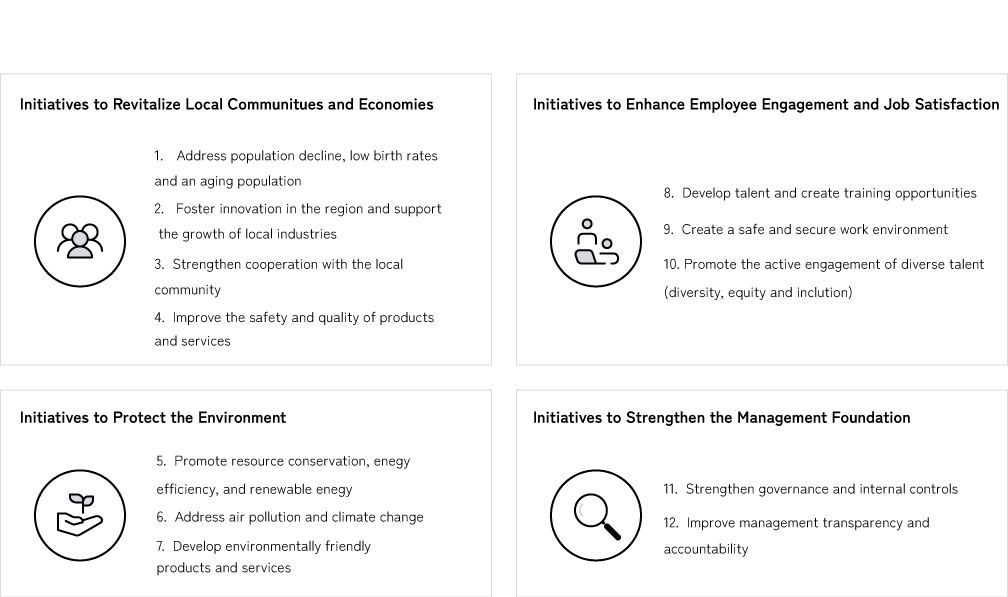
Materiality Identification Process
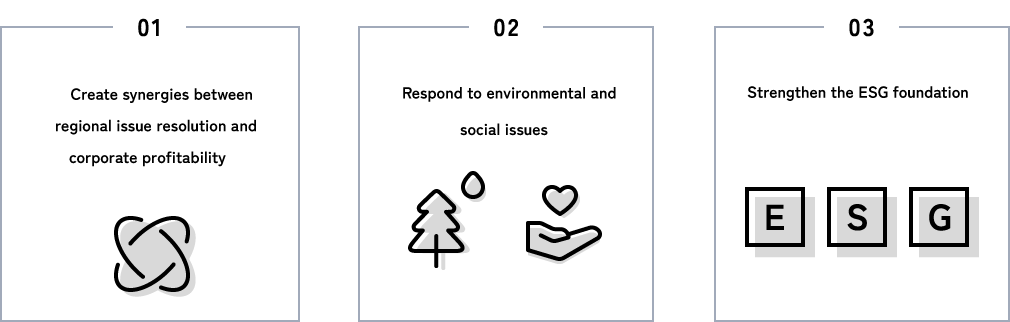
In the YMFG Medium-Term Management Plan (FY2025–FY2029), which commenced in FY2025, the sustainability strategy is positioned as one of the strategies constituting “Basic Goal 3: Deepening the Multi-Bank, Single Platform.”
By steadily advancing initiatives under the three priority themes of the sustainability strategy, we will further deepen sustainability-driven management and increase our corporate value.
Three priority themes
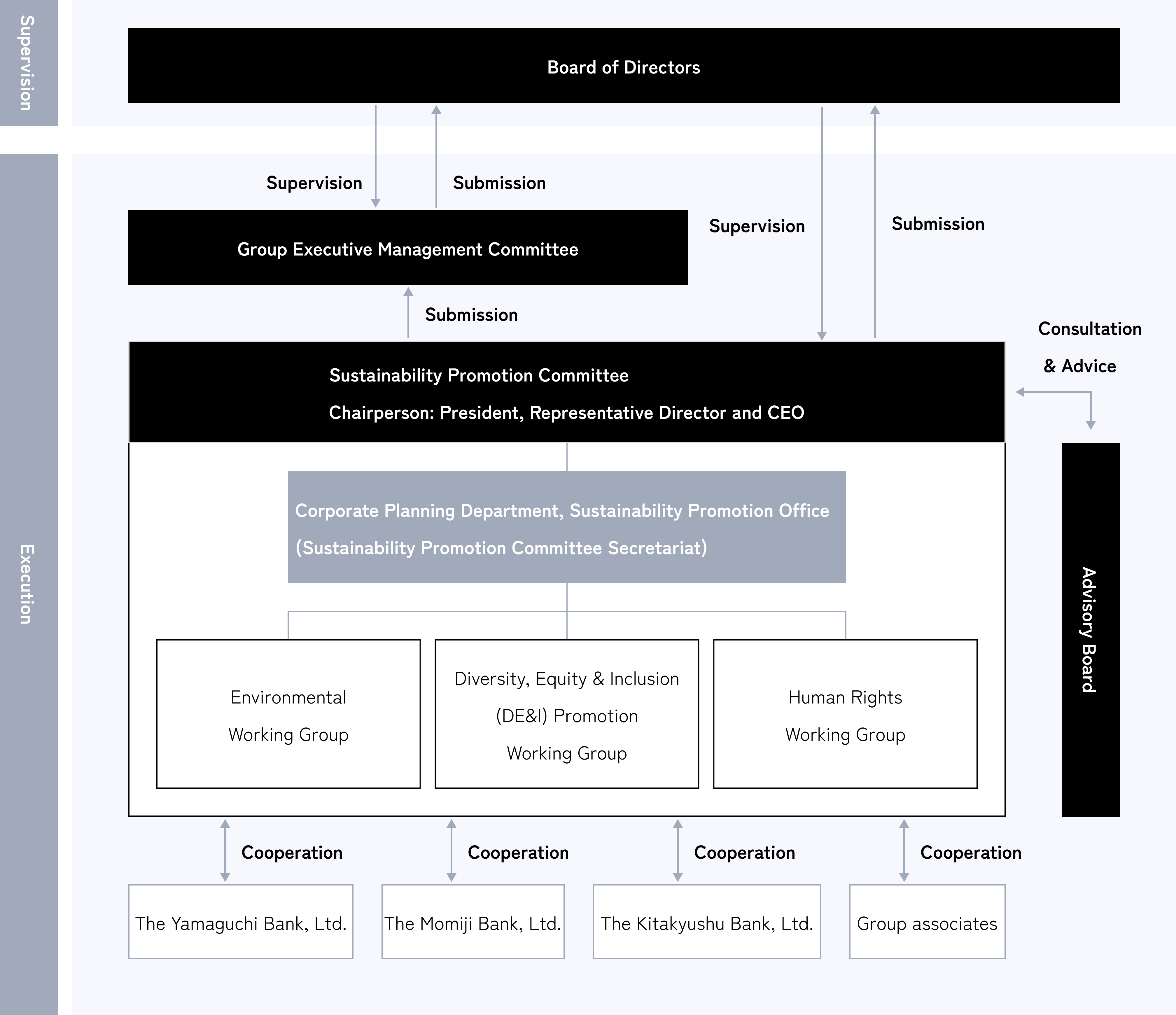
The Group holds regular meetings of the Sustainability Promotion Committee, chaired by the President and CEO. The Committee centrally deliberates on and manages the progress of sustainability initiatives.
Matters discussed by the Sustainability Promotion Committee are, as appropriate, further deliberated by the Group Executive Committee before being submitted to the Board of Directors, which oversees the Group’s sustainability initiatives.
In addition, the Group has established function-specific working groups under the Committee to promote initiatives across the organization through a cross-functional framework.
Main Agenda Items Submitted to the Board of Directors (since FY2023)
|
FY2023 |
|
|
FY2024 |
|
|
FY2025 |
|
Overview of the Sustainability Promotion Committee
|
Composition |
Meeting Frequency |
|
|
Chair |
|
Held once every three months, in principle (FY2025: 8 meetings held) |
|
Vice Chair |
|
|
|
Members |
|
|
The Group positions sustainability initiatives as a key management priority that contributes to enhancing corporate value over the medium to long term. From the perspective of enhancing the effectiveness of these initiatives, sustainability-related metrics are incorporated into the evaluation criteria for the executive compensation framework.
Specifically, “ESG evaluation (FTSE ESG Score),” as well as indicators related to diversity, equity and inclusion (DE&I) and the environment, have been adopted as non-financial metrics in the calculation of performance-linked compensation.
The Group has established an Advisory Board as a consultative body to the Sustainability Promotion Committee in April 2024, with the aim of further advancing sustainability management.
By leveraging the broad expertise of external experts*, the Group seeks to appropriately identify ESG issues arising from rapid changes in the external environment, as well as those affecting the Group and local communities, and to strengthen its responses to these challenges.
- As an external expert serving as a member of the Advisory Board, the Group has invited Mr. Kenji Fuma, a leading authority in sustainability management and President and CEO of Neural, Inc. Through Mr. Fuma’s participation, the Group aims to further strengthen its sustainability initiatives.
Main Topics Discussed at the Advisory Board
|
FY2024 |
|
|
FY2025 |
|
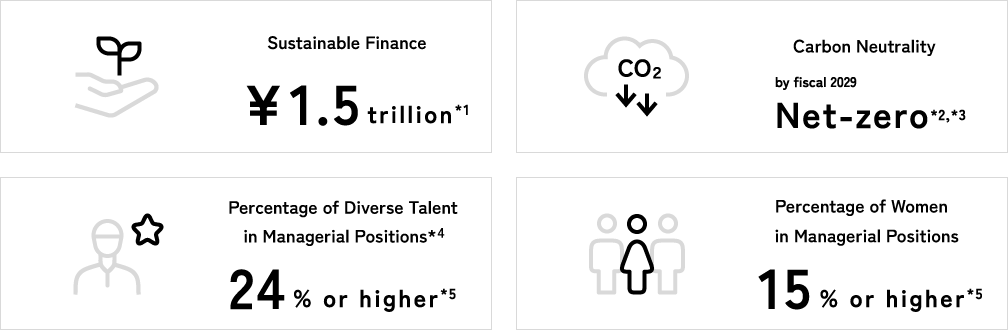
- Cumulative amount executed for the period from FY2022 to FY2031.
- Scope 1 and Scope 2 emissions are included.
- The YMFG Medium-Term Management Plan (FY2025–FY2029) aims to achieve, one year ahead of schedule, the medium- to long-term target announced in November 2022 to achieve net-zero CO2 emissions (Scope 1 and Scope 2) by FY2030.
- Diverse human capital includes women, non-Japanese employees, mid-career hires, alumni, employees engaged in side jobs, and employees with experience in external secondments.
- Targets to be achieved by FY2029.